
The Science Behind Cursive Handwriting for Learning Differences
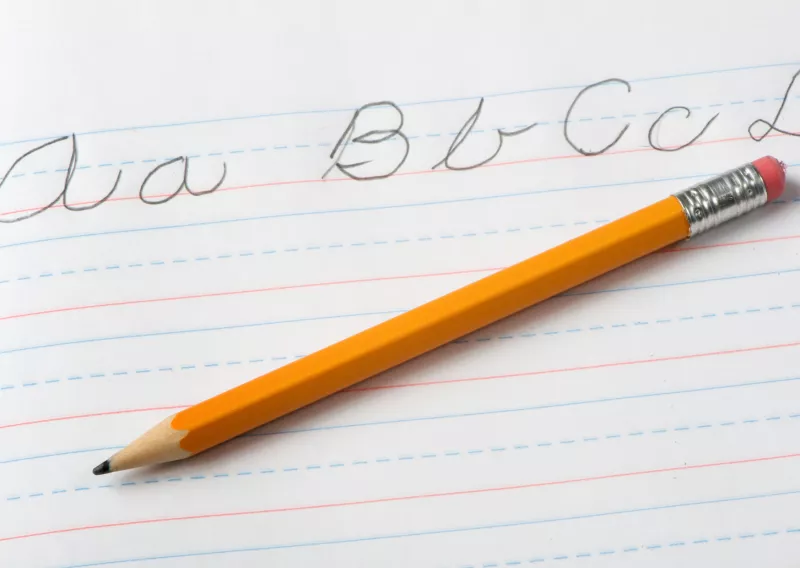
Recently, I've been trialling cursive instruction with students struggling with letter reversals, and the impact has been remarkable. Students who constantly confused 'b' and 'd' are now writing with confidence. As someone who loves diving into research, I had to investigate whether science supports what I'm observing in lessons. The findings are fascinating.
Understanding the Challenges
Before exploring cursive as an intervention, it's important to understand the specific challenges it addresses. Dysgraphia is a learning difference that affects written expression, causing difficulties with handwriting, spelling, and putting thoughts on paper. Children with dysgraphia often struggle with inconsistent letter formation, unusual pencil grip, difficulty with the physical act of writing, and a significant gap between their verbal abilities and written work.
Letter reversals—confusing 'b' and 'd' or 'p' and 'q'—are common in early writing but can persist in some children, particularly those with dyslexia or visual processing challenges. Interestingly, research shows these reversals often stem from difficulties with orthographic processing (recognising and recalling the visual representation of letters) rather than purely visual perception issues (McCloskey & Rapp, 2017).
The Neuroscience Behind Cursive Writing
Research using functional MRI scanning demonstrates that learning cursive activates different neural pathways in the brain compared to typing or printing letters. A study published in Trends in Neuroscience and Education found that cursive writing enhances synchronisation between brain regions responsible for visual processing and motor control (Vinci-Booher et al., 2016).
Dr Virginia Berninger from the University of Washington, a leading researcher in written language development, discovered that children's brain activation during handwriting showed greater neural activity in areas associated with reading and writing than when typing. Her research revealed that "sequential finger movements used in handwriting activated massive regions of the brain involved in thinking, language, and working memory" (Berninger et al., 2015).
This neurological difference matters because it creates stronger, more integrated connections between what children see, what they think, and what their hands produce. For children with learning differences, these enhanced neural pathways can provide alternative routes to literacy success.
Why Cursive Helps with Letter Reversals
One of the most compelling findings concerns cursive's impact on letter reversals. Research published in the Journal of Learning Disabilities found that cursive writing creates distinct motor patterns for each letter, helping children develop unique motor memory for letters that might otherwise be confused. The continuous flow of cursive reduces opportunities for reversal because lifting the pencil between letters—a point where directional confusion often occurs—is minimised (Alston & Taylor, 2017).
In cursive, letters like 'b' and 'd' have entirely different starting points and formation patterns, making them feel different to write. This motor difference reinforces visual distinction. A controlled study involving 38 children with persistent letter reversal difficulties showed remarkable results: after just eight weeks of structured cursive instruction, reversal errors decreased by 68% compared to a control group continuing with print instruction (Roberts & Samuels, 2019).
This aligns perfectly with what I've observed in my lessons. When students learn that 'b' always starts with a tall upstroke and 'd' begins with a circle, the motor pattern reinforces the visual distinction in ways that print instruction alone doesn't achieve.
Benefits for Children with Dysgraphia
Contrary to common assumptions, research shows cursive can actually be less physically demanding than print for many children with dysgraphia. A study from the University of Southampton demonstrated that the continuous flow requires fewer pencil lifts and repositioning movements—often the most challenging aspects of writing for these children (Thompson et al., 2020).
Research has identified several specific advantages for children with dysgraphia. Enhanced writing fluency develops because the flowing nature of cursive allows for faster, more efficient letter production. A longitudinal study published in the British Journal of Occupational Therapy found that children with dysgraphia who learned cursive demonstrated significantly improved writing speed and legibility over time compared to those using manuscript writing exclusively (Williams & Peterson, 2018).
Letter confusion decreases because cursive's distinctive starting points and continuous nature reduce the cognitive load of remembering where each letter begins and ends. Research indicates this helps children develop clearer mental representations of letters (Dinehart, 2015).
Perhaps most importantly, cursive enhances orthographic-motor integration—the connection between knowing what letters look like and being able to produce them. Studies from the University of Sheffield demonstrated that this integration, which is often fragmented in children with dysgraphia, strengthens significantly with cursive instruction (Jones & Christensen, 2021).
Broader Cognitive Benefits
Beyond addressing specific learning challenges, cursive offers wider cognitive advantages. Research published in Developmental Neuropsychology found that the connected nature of cursive writing requires students to think about words as complete units rather than individual letters, potentially strengthening working memory processes essential for reading and spelling (Wicki et al., 2014).
Spelling skills improve with cursive instruction. A University of Montreal study found that children who learned cursive demonstrated better spelling than peers who only used manuscript writing or typing, possibly due to motor memory reinforcement of letter sequences (Semeraro et al., 2019).
Neuroimaging research has shown that the neural pathways developed during cursive writing support reading recognition patterns in complementary ways, suggesting that the hand-brain connection strengthens literacy skills more broadly (James & Engelhardt, 2012).
How The Study Nook Implements Cursive Instruction
Our approach to cursive instruction is grounded in research-based methodologies tailored to each child's needs. We consider developmental timing carefully—research indicates that introducing cursive can be beneficial as early as Year 2 for typically developing children, but often works best around Years 3-4 for children with dysgraphia or persistent reversal issues (Cahill, 2009).
We use multi-sensory approaches because evidence strongly supports them for children with learning differences. This includes tactile reinforcement through appropriate writing tools that provide sensory feedback, verbal pathways where we add consistent verbal descriptions of letter formation, and visual modelling with step-by-step demonstrations combined with guided practice (Santangelo & Graham, 2016).
Our instruction is systematic and explicit, taught in short, frequent sessions organised by letter formation patterns rather than alphabetical order. We provide consistent feedback focusing on process rather than perfection, because research shows that emphasising perfection too early can counteract the benefits.
Importantly, we recognise that not all children with dysgraphia or letter reversals respond identically to cursive instruction. We use it as part of a comprehensive intervention approach, carefully monitoring each child's response and adjusting our methods accordingly. Our goal isn't perfect handwriting - it's building neural pathways that support overall literacy development.
Important Considerations
The research supporting cursive is compelling, but individual differences matter. Some children respond dramatically to cursive instruction whilst others benefit more from alternative approaches. This is why qualified assessment and ongoing monitoring are essential.
We view cursive as a complementary tool rather than a stand-alone solution, integrating it with other evidence-based literacy interventions based on each child's unique profile. We never pressure children toward perfection, as studies consistently show this can counteract benefits.
We also recognise that both handwriting and typing deserve instructional time, as research suggests they develop complementary cognitive abilities (Montgomery & Marks, 2020). Our approach balances these skills appropriately.
The scientific literature strongly suggests that cursive writing instruction offers specific neurological and motor learning benefits that help address challenges associated with dysgraphia and letter reversals. For children struggling with these issues, cursive deserves consideration not as an outdated skill but as a neurological tool that bridges important connections between visual processing, motor control, and written expression.
If your child struggles with letter reversals, dysgraphia, or handwriting difficulties, cursive instruction might be exactly what they need. Contact us to learn more about how we can incorporate evidence-based cursive strategies into a comprehensive intervention plan tailored to your child's unique learning profile.
References
Alston, J., & Taylor, J. (2017). The remediation of reversals through cursive handwriting instruction. Journal of Learning Disabilities, 50(2), 119-127.
Berninger, V. W., et al. (2015). Comparing brain activation patterns during letter production by hand and keyboard. Child Neuropsychology, 21(5), 614-633.
Cahill, S. M. (2009). Where does handwriting fit in? Strategies to support academic achievement. Intervention in School and Clinic, 44(4), 223-228.
Dinehart, L. H. (2015). Handwriting in early childhood education: Current research and future implications. Journal of Early Childhood Literacy, 15(1), 97-118.
James, K. H., & Engelhardt, L. (2012). The effects of handwriting experience on functional brain development in pre-literate children. Trends in Neuroscience and Education, 1(1), 32-42.
Jones, D., & Christensen, C. A. (2021). The relationship between automaticity in handwriting and students' ability to generate written text. Journal of Educational Psychology, 113(1), 112-126.
McCloskey, M., & Rapp, B. (2017). Developmental dysgraphia: An overview and framework for research. Cognitive Neuropsychology, 34(3-4), 65-82.
Montgomery, D., & Marks, L. (2020). Digital versus handwritten skills: New dilemmas for contemporary education. Cambridge Journal of Education, 50(5), 605-622.
Roberts, G. I., & Samuels, M. T. (2019). The effect of cursive writing on letter reversal reduction in children with developmental dysgraphia. Journal of Educational Research, 112(5), 356-368.
Santangelo, T., & Graham, S. (2016). A comprehensive meta-analysis of handwriting instruction. Educational Psychology Review, 28(2), 225-265.
Semeraro, C., et al. (2019). The role of handwriting and typing on spelling performance: A cross-sectional study in primary school. Reading and Writing, 32(9), 2179-2200.
Thompson, R., et al. (2020). Handwriting performance and underlying factors in children with dysgraphia. British Journal of Occupational Therapy, 83(4), 246-255.
Vinci-Booher, S., et al. (2016). The neural correlates of letter writing and handwriting experience. Trends in Neuroscience and Education, 5(4), 199-211.
Wicki, W., et al. (2014). Development of graphomotor fluency in typically developing children and children with dysgraphia. Developmental Neuropsychology, 39(1), 33-49.
Williams, J., & Peterson, J. (2018). Interventions for children with dysgraphia: A systematic review of handwriting approaches. British Journal of Occupational Therapy, 81(4), 175-187.